
This post contains affiliate links. As an Amazon Associate, Small Space Sorted earns from qualifying purchases at no extra cost to you.
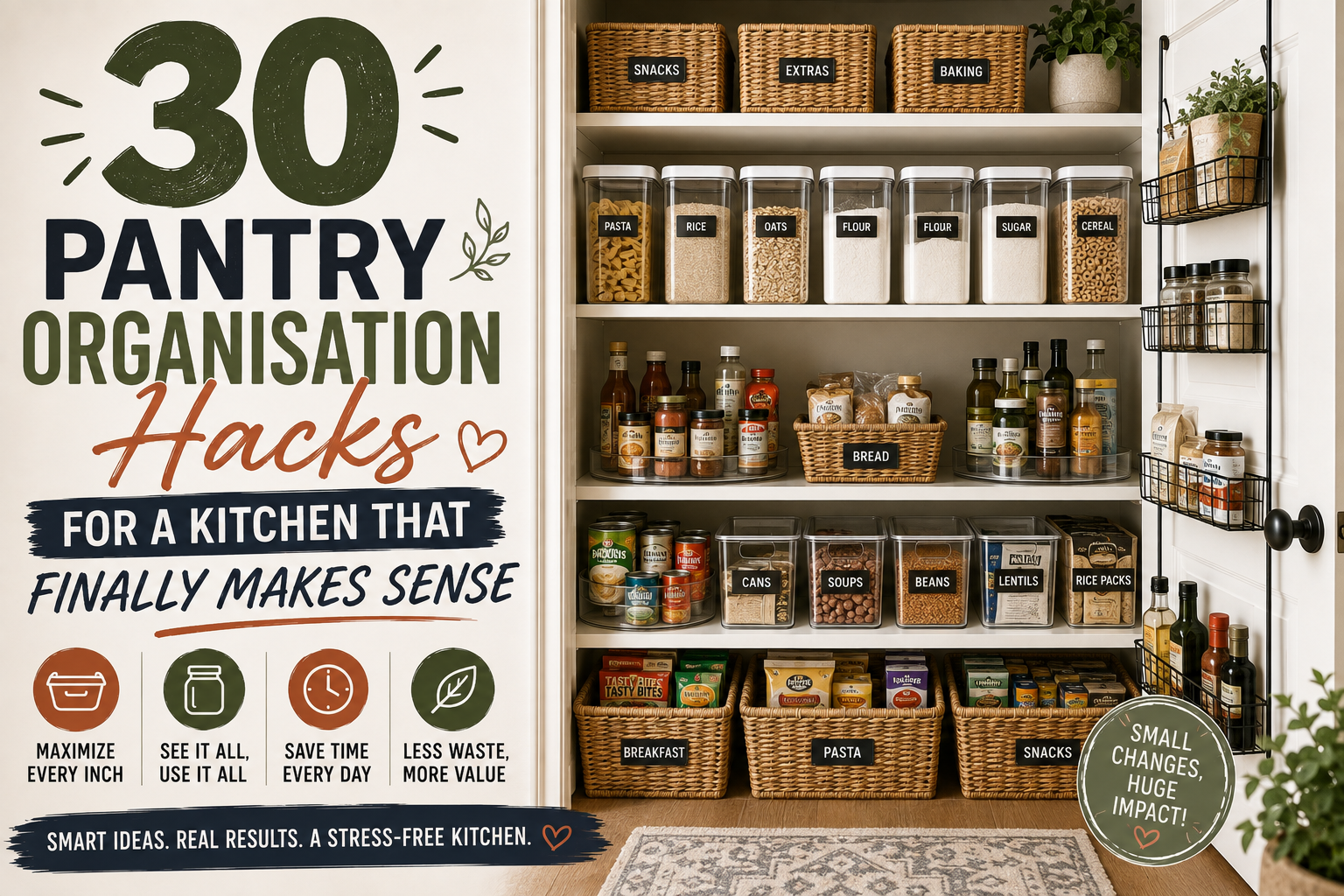
If your pantry looks more like a game of Tetris gone wrong than a functional storage space, you are not alone. Between bulk grocery runs, mismatched snack bags, and cans hiding three rows deep, pantries are one of the hardest spaces in the home to keep organized. The good news is that you do not need a full remodel to fix it. With the right containers, a bit of zoning, and a handful of smart products, you can turn any pantry, big or small, into a space that actually makes sense. Here are 30 tried-and-true pantry organization hacks to get you there.
Maximize Every Inch
1. Add an expandable shelf riser. A stackable shelf riser instantly doubles usable space on a single shelf without any permanent changes, perfect for canned goods or spice jars.
2. Use the back of the door. A hanging over-the-door organizer is ideal for spices, snack packets, foil, and wrap, freeing up real shelf space for bulkier items.
3. Stack with clear bins. Stackable clear bins let you turn one deep shelf into two fully visible layers.
4. File baking sheets vertically. Use a simple divider to store trays, cutting boards, and muffin tins on their side instead of stacked flat.
5. Claim dead corner space. A corner-fit turntable helps you reach items that would otherwise get lost in the back.
6. Roll in a slim cart. A narrow rolling cart tucked beside the fridge or in a gap between cabinets adds extra storage without renovation.
7. Hang a wire basket. Mount one on the wall or inside a cabinet door for onions, garlic, or potatoes that need airflow.
8. Compress bulk bags. Reusable vacuum-seal bags shrink oversized bags of rice, flour, or pet food down to a fraction of their original footprint.
See It All, Use It All
9. Decant into clear containers. Moving dry goods into clear airtight containers means nothing gets forgotten behind a bag or box again.
10. Label everything the same way. A set of matching pantry labels makes every shelf easy to scan at a glance, and makes it simple for the whole family to put things back correctly.
11. Turn cans face-forward. A tiered can organizer rack lets every label face out so you always know what you have.
12. Sort snacks into labeled baskets. Group snacks by type in labeled woven storage baskets so kids, and adults, can grab what they need independently.
13. Keep spices in one layer. A single-layer spice rack beats a deep drawer where jars get buried and forgotten.
14. Practice first-in, first-out. Dedicate a small “use soon” shelf for items nearing their best-by date.
15. Tier your canned soups. A second shelf riser keeps every row of soup or canned vegetables visible instead of hidden behind the front row.
16. Add a mini chalkboard tag. A small label on each basket noting its contents saves you from digging around to check.
Save Time Every Day
17. Create zones, not brand groups. Organize by purpose, such as breakfast, baking, or snacks, rather than by brand so meal prep is faster.
18. Keep a running grocery list. A magnetic notepad on the door makes it easy to jot down items the moment they run low.
19. Pre-portion grab-and-go snacks. Divide bulk snacks into single-serving containers for rushed mornings.
20. Store by frequency of use. Keep everyday appliances and staples at eye level, and reserve high or low shelves for occasional items.
21. Corral oils and vinegars on a turntable. A lazy Susan organizer means nothing gets pushed to the back and forgotten.
22. Keep a step stool close by. Top shelves stay just as functional as low ones when reaching them is not a hassle.
23. Repackage bulk buys immediately. Decant warehouse-sized purchases into your containers the day they arrive, not the day you need them.
Less Waste, More Value
24. Protect staples from pests and moisture. Storing flour, sugar, and grains in airtight containers keeps them fresh far longer than their original packaging.
25. Date everything you decant. Add the purchase or expiration date to your labels so nothing quietly expires in the back of a jar.
26. Keep a simple inventory list. A running tally on the inside of a cabinet door helps you avoid buying duplicates you already have.
27. Clip-seal opened bags. Move opened chips, cereal, or pasta into a bin with a proper lid rather than relying on a clip alone.
28. Rotate stock regularly. Every few months, move older items to the front and new purchases to the back.
29. Let go of what you will not use. Donate unopened items you know you will not get to instead of letting them expire unused.
30. Do a 10-minute Sunday reset. A quick weekly tidy returns stray items to their home before the week starts, so the system keeps working for you instead of against you.
The Bottom Line
A well-organized pantry is not about perfection, it is about building a simple system that is easy to maintain. Start with one or two of these hacks, whether it is decanting your dry goods into matching containers or finally labeling those baskets, and build from there. Small changes really do add up to a pantry, and a kitchen, that finally makes sense.