
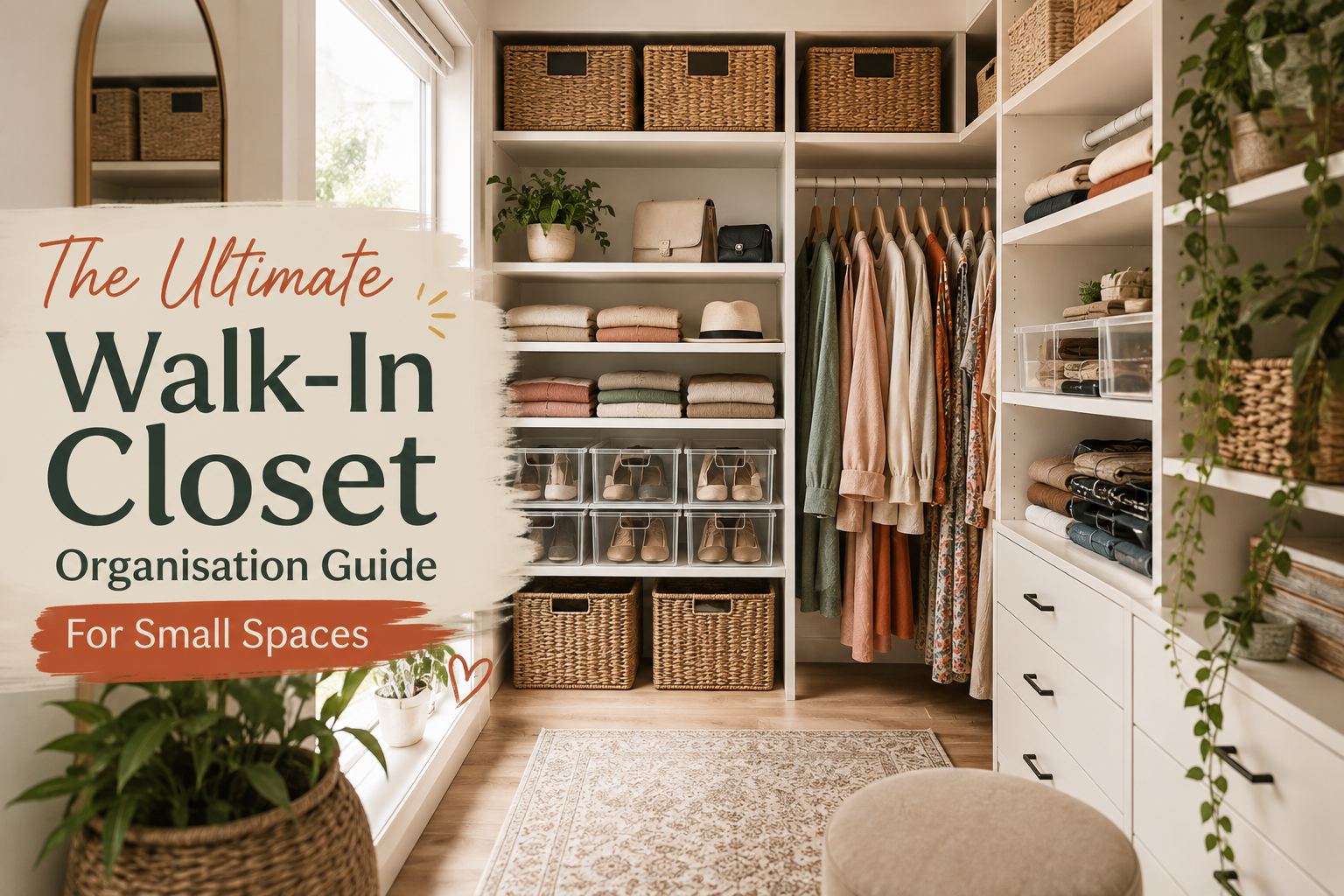
A walk-in closet sounds like a luxury, but if yours is on the smaller side, it can feel just as cramped and chaotic as any standard closet. The good news is that a compact walk-in has one big advantage over a reach-in: you can step inside and use every wall, corner, and inch of floor space. This guide breaks down exactly how to turn a small walk-in closet into a functional, calm, and good-looking space, without a full renovation.
Why Small Walk-In Closets Need a Different Strategy
A small walk-in gives you something a standard closet never can: room to actually stand inside it. That single detail changes the whole approach. Instead of stacking everything vertically on one wall, you can plan for wall-to-wall zones, walking clearance, and sightlines that make the space feel bigger than its square footage. The trade-off is that every wasted inch shows immediately, so the plan has to be intentional from the start.
Step 1: Empty It Out and Edit What Goes Back In
Before buying a single organizer, pull everything out and sort it into keep, donate, and toss piles. Small walk-ins fill up fast, so be honest about pieces you have not worn in a year, duplicate basics, and shoes that no longer fit. The goal is not a bare minimalist wardrobe, it is simply making sure only things you actually use earn a spot in a limited footprint.
Step 2: Map Zones Before You Buy a Single Bin
Walk the closet and assign a purpose to each wall: hanging clothes on one side, folded items and shelving on another, and shoes or accessories near the entrance or floor level. Grouping by category, rather than scattering similar items across the room, keeps the layout intuitive so you are not hunting for a belt on one side and a scarf on the other.
Step 3: Build Upward, Not Just Outward
Floor space in a small walk-in is precious, so let the walls do the heavy lifting. Add a second hanging rod below the first for shirts and folded trousers, install shelving above the main rod for baskets and off-season items, and use the back of the door for hooks or a slim shoe organizer. Vertical storage can roughly double your capacity without taking up a single extra square foot on the floor.
Step 4: Choose Storage That Earns Its Keep
In a compact walk-in, every bin and basket should be sized to the shelf, not just grabbed off a store shelf. Clear bins are ideal for anything you need to identify at a glance, like folded knitwear or accessories, while woven baskets work well for bulkier or less-used items on high shelves. Labeling each container, even loosely by category, saves time and prevents the space from sliding back into clutter.
Step 5: Keep Shoes and Accessories Visible and Contained
Shoes and small accessories are usually what tip a walk-in from tidy to messy. Stackable shoe organizers or slanted shelving let you see every pair without digging, while small drawer dividers or clear boxes keep jewelry, belts, and scarves from becoming a tangled pile. Keeping these items contained near eye level also means you get dressed faster, since nothing is buried behind something else.
Step 6: Add Light and a Mirror
Small walk-ins often have poor lighting, since they are tucked away from windows. A battery-powered or plug-in LED strip along the shelving instantly makes it easier to match colors and find items, while a slim full-length mirror on the back of the door lets you check an outfit without leaving the closet. Both upgrades are inexpensive but make the space feel far more finished.
Step 7: Set Up a Seasonal Rotation System
Even a well-planned walk-in cannot hold every season at once comfortably. Keep only the current season’s clothing at easy reach, and store off-season pieces in labeled bins on a top shelf or in another closet entirely. Swapping the rotation twice a year takes an afternoon and keeps the everyday space from feeling overstuffed.
Keep It That Way: Simple Maintenance Habits
An organized walk-in stays organized through small daily habits rather than another big overhaul. Return hangers to their zone right after wearing an item, do a five-minute reset each week, and revisit the keep-donate-toss sort every few months as your wardrobe changes. These small routines protect the work you put in during the initial setup.
Final Thoughts
A small walk-in closet does not need a renovation to feel spacious, it needs a layout that respects its size. Clear zones, vertical storage, right-sized bins, and a few honest decluttering passes are usually enough to turn a cramped little room into one of the most functional spaces in the house.